

Yorkshire and Humber is home to a diverse, vibrant population, and we are committed to ensuring all communities have the chance to participate in research. With higher disease prevalence in certain specialties, we aim to provide these populations with valuable research opportunities.
Diseases
In the Yorkshire and Humber region, over 47,000 people have been diagnosed with dementia, with an estimated 76,000 individuals living with the condition. Dementia is recognized as a leading cause of death and remains a significant contributor to ill health in the area. Over the past five years, more than 4,800 participants have been recruited into dementia studies across 100 different research projects. Regionally, all three Integrated Care Boards (ICBs) are focused on improving experiences and outcomes at every stage of the dementia journey, from the initial recognition of symptoms through to end-of-life care. This effort includes collaboration with academic institutions and the life sciences industry to bring innovative treatments to patients throughout the Yorkshire and Humber region.

Watch this patient story from Wendy Mitchell, research champion and advocate for Dementia research talking about her experience of dementia and being involved in research
Cancer incidence and mortality rates in Yorkshire and the Humber are significantly higher than the national average, making cancer research a key priority. With a growing, ageing population, the region sees higher rates of common cancers like lung, colorectal, and breast cancer.
Yorkshire has the third-worst cancer outcomes in England. In 2019, approximately 627 cases of cancer were diagnosed per 100,000 people in Yorkshire, compared to 610 in England. The same year, the region saw 270 cancer deaths per 100,000, compared to 255 nationally (Ref).
In Yorkshire and Humber over 46,000 participants have been recruited into Cancer studies in the last 5 years across more than 500 studies.
NIHR Experimental Cancer Medicine Centres (ECMC)
Leeds Cancer Centre
NIHR CRF
NIHR Clinical Research Facility at
Leeds Teaching Hospitals NHS Trust (LTHT) has been selected to support a new NHS England initiative to expand access to cancer vaccine research. Professor Chris Twelves, Director of Leeds CRF, expressed enthusiasm about the collaboration, saying: “We are delighted to offer patients the opportunity to participate in this innovative trial for a ‘personalised’ vaccine aimed at reducing the risk of bowel cancer recurrence. This is just one of an increasing number of innovative cancer vaccine trials open to patients in and around our region.”
Obesity levels in Yorkshire and Humber are among the highest in England. According to recent data from Public Health England and the NHS:
Adult Obesity: Approximately 66% of adults in the region are classified as overweight or obese, which is higher than the national average of around 63%.
Childhood Obesity: For children, the region also has concerning levels of obesity. About 1 in 5 children aged 4-5 years (Reception age) are classified as overweight or obese, while this figure increases to nearly 1 in 3 by the time they reach Year 6 (ages 10-11).
These rates are also above the national averages.

Yorkshire Obesity Research Alliance (YORA) – Funded by Yorkshire and Humber Research Delivery Network, the Yorkshire Obesity Research Alliance (YORA) is a community of over 150, with members drawn from universities, the NHS, local authorities, businesses and the public. The work of YORA contributes to the region’s obesity practice and policy through collaboration and co-production.
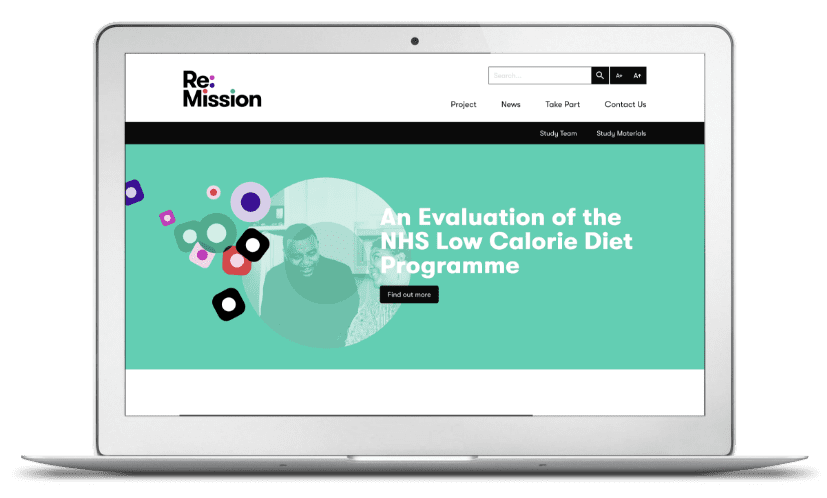
The Alliance successfully obtained NIHR funding for the Re:Mission study which was an evaluation of the NHS low calorie diet (LCD) programme.
Elements of the Re:Mission study are now integrated into the national roll-out of the LCD programme https://remission.study/
In addition the team has been successful in delivering a national study to evaluate the effectiveness of 21 Complications of Excess Weight (CEW) clinics across England, which support children and young people with issues including type 2 diabetes, breathing difficulties, low self-esteem and emotional wellbeing.
Respiratory disease accounts for 13.6% of all deaths in Yorkshire and the Humber, with rates notably higher than the national average. Conditions such as chronic obstructive pulmonary disease (COPD), asthma, and pneumonia are prevalent, especially in deprived communities. In 2020, the under-75 mortality rate from respiratory diseases reached 39.7 per 100,000, exceeding the England average of 33.4 (ref). Factors like smoking and industrial exposure contribute to the region’s high mortality.
Over 119,000 participants have been recruited into Respiratory studies in the last 5 years across more than 169 studies.

Watch how the Patient Recruitment Centre in Bradford has been supporting Asthma studies.
Yorkshire and Humber has one of the highest diabetes prevalence rates in the UK, with approximately 8% of the adult population diagnosed with diabetes, compared to the national average of 7.1%1. This equates to over 440,000 people living with diabetes in the Yorkshire and Humber region, offering a large and relatively untapped patient population to recruit from for clinical trials.
The total NHS investment into the diagnosis, management and treatment of complications of diabetes in the Yorkshire and Humber region is an estimated £933.5m with 60% of that spending on the costs of diabetes complications. It is estimated that diabetes will cost the NHS across the Yorkshire and Humber region nearly £1.57 billion by 20352, if prevalence continues to rise at the current rate, making it a regional research priority in terms of disease prevention, treatment and management.
1. Diabetes UK. (2023). Diabetes Prevalence 2023. Available from: [Diabetes UK Statistics] (https://www.diabetes.org.uk/professionals/position-statements-reports/statistics).
2. Diabetes UK (2024) Investing in Diabetes Care in England https://www.diabetes.org.uk/investing-in-care/uk/england
Cardiovascular disease (CVD) is responsible for 25% of all deaths in the Yorkshire and Humber region, making it one of the leading health challenges in the area. Certain locations, such as Hull and Doncaster, experience even higher rates of CVD-related deaths, largely driven by socioeconomic factors. Contributing to this elevated risk are high rates of smoking, obesity, and deprivation, which are more prevalent in these regions and are well-known risk factors for cardiovascular disease.
Yorkshire and Humber has a strong commitment to advancing cardiovascular research. In 2023/24, more than 3,462 patients participated in 76 different CVD research studies. These studies are exploring a wide range of topics, from improving diagnostic tools to developing novel treatments for cardiovascular conditions. By involving patients from across the region in this research, healthcare providers can better understand the unique needs of Yorkshire and Humber’s population, ensuring that interventions are both effective and equitable. Research collaborations between healthcare providers, universities, and industry partners are also key to driving innovation and improving patient outcomes for those affected by cardiovascular disease
People
Yorkshire and Humber is home to over 5 million people, with 85.4% identifying as White and 14.5% from ethnically diverse backgrounds. This includes 8.9% Asian, 2.1% Black, 2.1% Mixed/Multiple ethnic, and 1.4% from other ethnic groups (Census 2021). The region’s sizeable ethnic minority population includes Black African, Black Caribbean, Bangladeshi, and Pakistani communities. Yorkshire and Humber is also one of the more deprived regions in England.
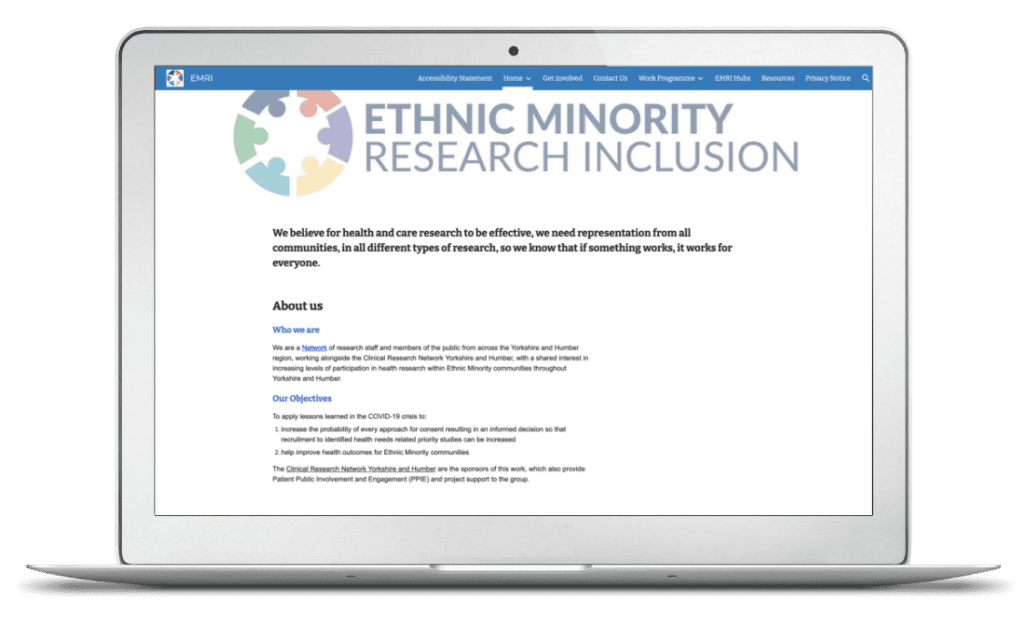
In Yorkshire and Humber we have the Ethnic Minority Research Inclusion initiative. We believe for health and care research to be effective, we need representation from all communities, in all different types of research, so we know that if something works, it works for everyone.
As of the most recent data from the 2021 Census, there are approximately 1.2 million children (aged 0-17) living in Yorkshire and Humber. This represents about 23% of the region’s total population. We have specialists health services for children and a strong culture of co-producing research with children. We have infrastructure and initiatives that specifically focus on research in children and young people.
Places
The Yorkshire and Humber region boasts a diverse geography, encompassing large urban areas such as Leeds, Sheffield, and Hull, as well as more rural and coastal communities like those along the Yorkshire coastline and within the North York Moors. This mix of densely populated cities and sparsely populated rural areas allows for the delivery of research in a variety of settings, each with its own unique challenges and opportunities.
This geographical diversity and partnership approach across the region provides a unique opportunity to test and deliver healthcare interventions in a wide range of settings, ensuring that research outcomes are applicable across various communities. It also allows for the development of tailored approaches to care, ensuring that both urban and rural populations in Yorkshire and Humber benefit from advances in research and treatment.

NIHR Commercial Research in Primary Care
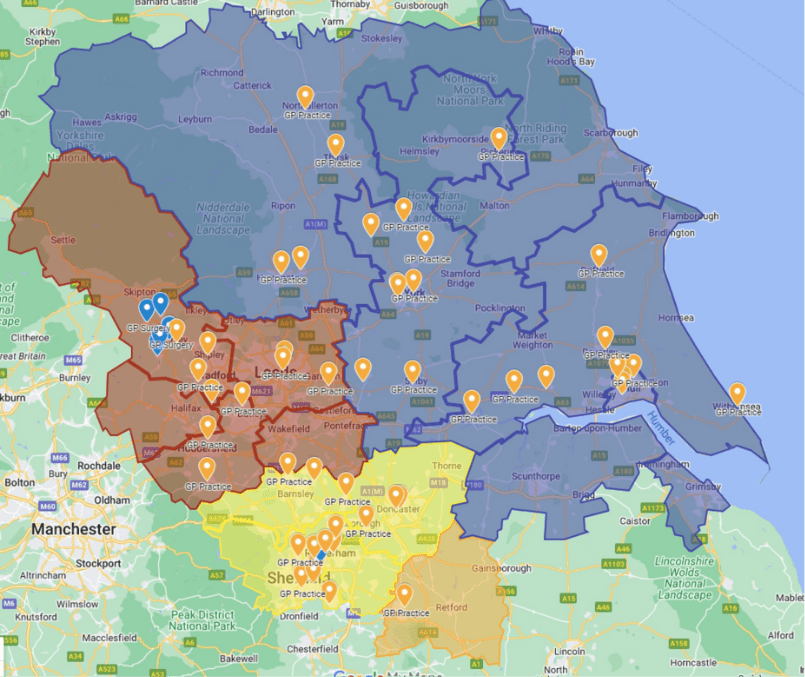
Yorkshire and Humber is home to approximately 1,300 GP practices, with nearly three-quarters (74%) actively participating in research. We have a very engaged cohort of Chief Investigators (CIs) and Principal Investigators (PIs) eager to enhance the delivery of commercial research in the region. The diverse population and varied disease prevalence in Yorkshire and Humber, including areas with high deprivation scores, provide an excellent infrastructure for conducting commercial research. In the 2023/24 period, we had a total of 28,304 participants recruited in primary care, of which 14,175 participants were involved in five commercial studies.
The map shows GP practices across the region that have recruited into commercial research studies.

The Discover Me study has achieved outstanding success in Yorkshire and the Humber, recruiting the highest number of participants nationwide. This study aspires to establish a dynamic repository of demographic, health, and genetic data to facilitate thorough analyses of clinical disease progression in primary care and to enhance risk prediction. By enrolling thousands of individuals from across the UK, encompassing a broad and ethnically diverse population, the study integrates electronic health record (EHR) data with genetic information. This integration aims to develop models for disease risk and progression, ultimately improving patient care and management within primary care settings.
Yorkshire and the Humber GPs and practices have shown considerable interest and actively promoted the study within their communities. To date, 58 practices in the region have participated, with an additional 87 expressing interest in this impactful research initiative. By the end of Q1 2024/25, Yorkshire and Humber has proudly recruited an impressive 20,118 participants for the Discover Me study.
As of the 2021 Census, there are approximately 1.1 million elderly people (aged 65 and over) living in Yorkshire and Humber. This group makes up around 20% of the region’s total population, reflecting the aging demographic trends seen across the UK.
As of recent estimates, there are approximately 1,500 to 1,600 care homes in the Yorkshire and Humber region. These include a mix of residential care homes, nursing homes, and specialist care facilities that provide services for elderly people, those with dementia, physical disabilities, and other care needs.
ENRICH Yorkshire and Humber:
Partnering with Industry to Advance Care Home Research.
Yorkshire and Humber’s ENRICH (Enabling Research in Care Homes) network provides a streamlined, research-ready platform for industry partners to conduct impactful studies within care home settings. With hundreds of care homes already part of the network and access to a diverse and underrepresented population, ENRICH allows you to generate real-world data while contributing to improved health outcomes for older adults.
Why Partner with ENRICH Yorkshire and Humber?
Care homes across the region are fully prepared to support high-quality trials, ensuring efficient and compliant study delivery.
Gain access to a broad demographic of older adults, enhancing the relevance and applicability of your research.
Collaborative Support:
Help advance healthcare for an ageing population while gaining valuable insights that drive the development of new treatments.
Partner with us to deliver your next study through ENRICH in Yorkshire and Humber, where we help bring innovative solutions to the forefront of elder care. Research community | ENRICH (nihr.ac.uk)